State of Gender Diversity: Year-in-review 2026 Update
Gender diversity has become both a social priority and a commercial performance lever. New 2025 analysis from the Bankwest Curtin Economics Centre (BCEC) and the Workplace Gender Equality Agency (WGEA) shows that organisations with gender‑balanced leadership teams deliver safer business outcomes, stronger market value, higher profitability, and superior shareholder returns.
For example, an ASX‑listed company with a $1 billion valuation can realise an estimated $93 million uplift when progressing toward gender balance at the top.
Why This Matters in Recruitment
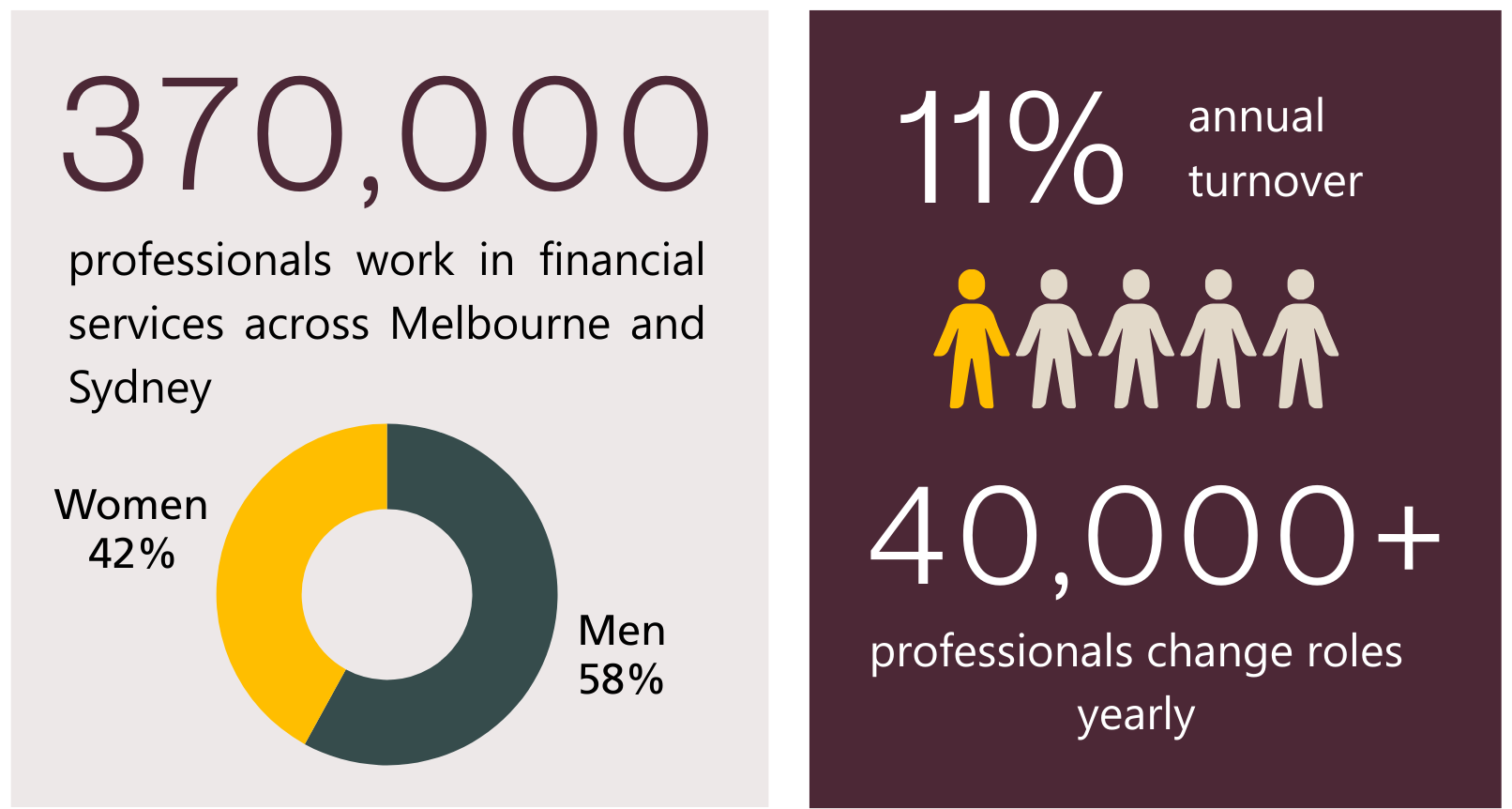 Across Melbourne and Sydney, around 370,000 professionals work in financial services. The diversity split is approximately 58% men and 42% women highlighting the challenge ahead. With 11% annual turnover, more than 40,000 professionals change roles yearly, creating a significant opportunity for organisations to influence gender diversity at scale.
* Data Source: Linkedin Talent Insights
Recruitment is one of the most powerful levers for improving gender balance. Every hiring decision can reshape organisational structure, culture, and long‑term performance. Inclusive hiring practices open access to broader, more innovative talent pools and reduce systemic barriers.
Increasingly, hiring leaders will be measured not only on outcomes, but on whether their decisions broaden access to higher‑paying, decision‑making roles, and on how well their actions align with published gender pay gaps and organisational targets.
Leading by Example: Kaizen’s Commitment
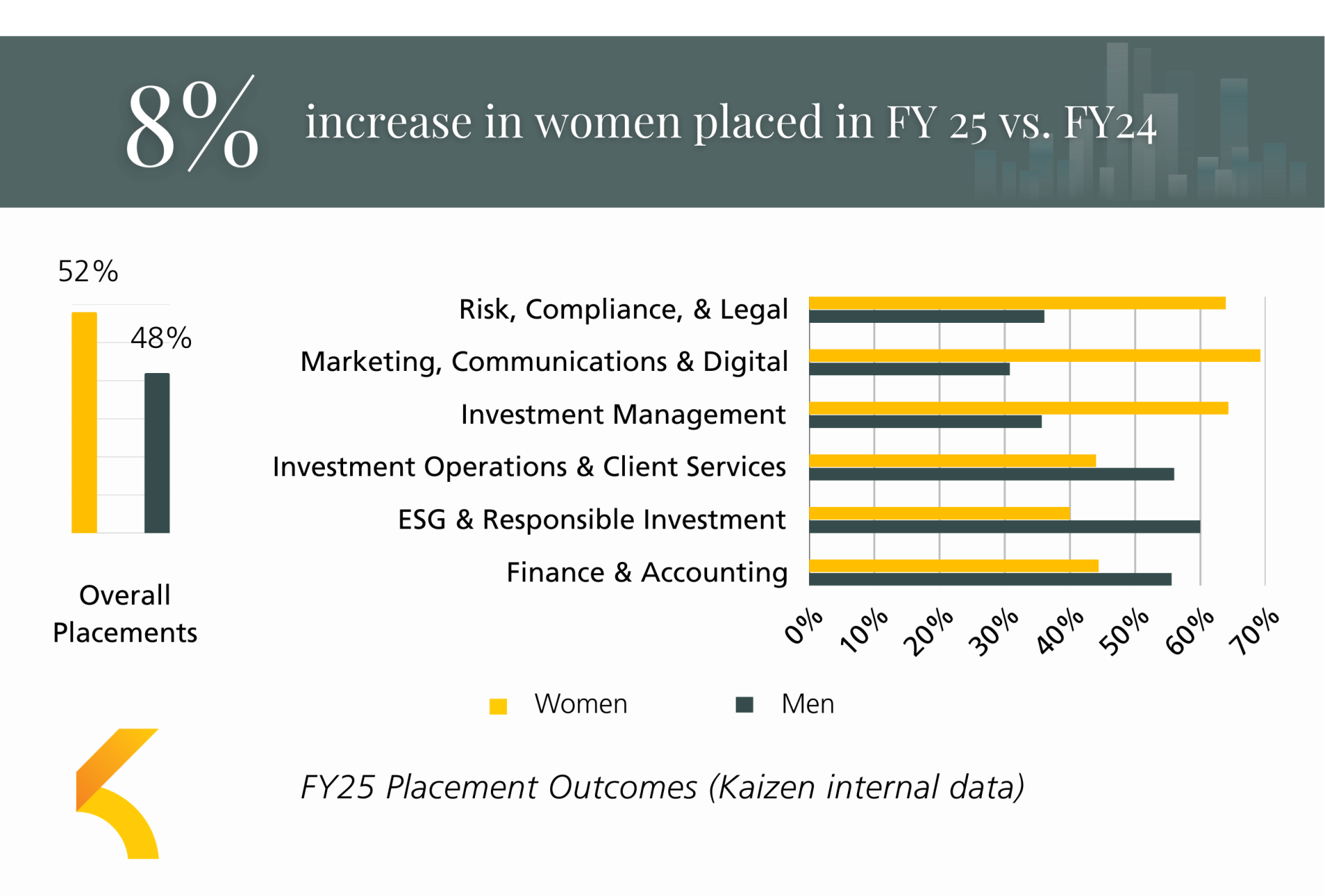
At Kaizen Recruitment, we do not just advise clients on gender diversity we model it. Our team is gender‑balanced across all levels, from Director to Client Services Associate. This commitment is reflected in our internal placement data for FY25:
What Organisations Can Do to Close the Gap

Hire for Skills Adjacency (70–80% Match)
This widens the talent pool, increases diversity without compromising capability, and counters the tendency for many qualified women to self‑select out unless they meet every requirement.
Invest in Targeted Upskilling
Coaching, squads, and role‑specific training make near‑fit hires viable and accelerate their impact.
Offer Flexibility Beyond Location
Compressed weeks, part‑time pathways, and defined core hours support retention for senior women and men with caring responsibilities.
Write Inclusive Job Ads
Avoid masculine language (“dominant,” “aggressive”) that reduces perceived belonging. Clearly separate must‑haves from nice‑to‑haves to reduce self‑screen‑out.
Keep Humans in the Loop with AI
Training data can embed historic bias. The well‑known Amazon example where they created a tool that showed bias against female talent demonstrates why human oversight, audit trails, and bias monitoring are essential.
* Source: Reuters, Amazon Scraps Secret AI Recruiting Tool That Showed Bias Against Women
Partner with a Recruitment Agency that Actively Sources Diverse Passive Talent
At Kaizen, we deliberately look far beyond the active talent market, identifying high-potential candidates who are not always visible through traditional channels. We also advocate for, coach, and engage with individuals who may not otherwise apply, expanding both access and opportunity.
Men’s Experiences in Inclusive Recruitment and Why They Matter
 True gender diversity removes barriers for everyone. Some organisations still do not offer equal flexibility or benefit parity, even though shared caregiving is a critical enabler of women’s workforce participation. When senior men visibly make use of flexible options, it normalises these behaviours across teams and helps shift culture.
Some men also face unintended penalties – hesitation to request flexibility, or the perception that gender diversity initiatives create a zero‑sum environment. Acknowledging these realities builds trust and increases adoption of inclusive practices.
When organisations commit to merit with fair access through transparent processes, clear criteria, development pathways, and flexible options both women and men benefit, and overall team performance improves.
Gender diversity is not a zero‑sum exercise; it is about removing structural and behavioural barriers so capable people of any gender can contribute at their best.
Industry Momentum: Transparency, Targets And What Comes Next
Pay Gap Transparency
Employer gender pay gaps have been public since 27 February 2024. Results now include median gaps, quartile composition, and Employer Statements. A combined release with deeper data is scheduled for 3 March 2026.
Legislated Target-Setting
From March 2025, employers with 500+ staff must set three gender equality targets and show progress within three years. Targets and outcomes will be published from reporting periods starting 1 April 2026.
Practice is Shifting
In 2023–24, 68% of employers conducted gender pay gap analyses and most reported taking action. Transparency is driving meaningful change.
What This Means for Professionals
For Employers: Your WGEA profile, pay gaps, targets, and Employer Statement are now visible to candidates, customers, investors, and boards. Expectations for actionable plans are rising.
For Candidates: You can now see which employers are making progress on flexibility, pay equity, and leadership pathways and make informed decisions accordingly.
What the Future Holds
Transparency and targets are here to stay, and financial services faces both a challenge and an opportunity to lead. Kaizen’s role is to translate this momentum into recruitment decisions that expand access to higher‑paying roles, accelerate leadership balance, and strengthen performance for clients and candidates.
We are proud that our FY25 placements moved the dial. If you are designing a search, rebuilding a team, or rewriting a job description, we can help ensure every decision counts.
Sources
This article draws on new analysis from the Bankwest Curtin Economics Centre (BCEC) at Curtin University and the Workplace Gender Equality Agency (WGEA), the Australian Government agency responsible for collecting and publishing employer gender pay gaps under the Workplace Gender Equality Act 2012.
More on Diversity
If you’re keen to learn more, click the images below to explore our other articles related to diversity and recruitment.
Get in Touch
Based in Melbourne and Sydney, Kaizen Recruitment specialises in financial services recruitment across funds management, wealth management, superannuation, investment consulting and insurance. If you’d like to discuss candidate career drivers and the current state of the market within the financial services recruitment landscape, feel free to reach out to us with your details below.
Like what you see?
Please feel welcome to join
Kaizen Recruitment’s mailing list